

At a June 3 event for New York Tech Week, LIM College’s Marcuse School of Graduate Studies brought industry professionals, creatives, and innovators together to examine how emerging technologies are transforming the fashion landscape, from design and production to marketing and consumer experience.
Tech Week is a decentralized tech conference presented by a16z, a venture capital firm in Silicon Valley. Every Tech Week, hundreds of individually organized events take place across the host city, from hackathons to panel discussions, community meetups and more.
All of LIM College’s master degree programs embed technology use throughout their curriculum and embody an AI-positive philosophy, focused on educating students to use AI ethically and critically.
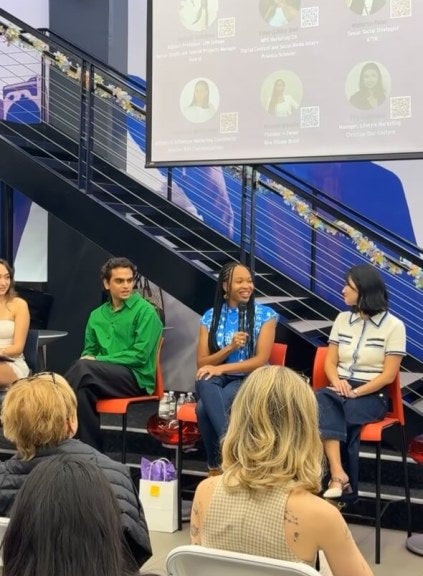
At Fashion x Tech LIM THREADx, LIM alumni speakers discussed innovation, creativity, and the future of fashion in a digitally driven world where AI is having an increasing impact.
Panelists:
- Nkonye Mwalilu, MBA ‘11, Founder of New Village Braid
- Maharsh Patel, MPS ‘22, Senior Social Strategist for ATTN:
- Effy Greissman, MPS ’18 Lifecycle Manager at Christian Louboutin
The session was moderated by Graduate Studies student Lillith Unal and adjunct faculty member Korinah Sodahlon, who is the Senior Studio and Special Projects Manager at Hearst Magazines.
Learn more about our fashion master's programs
The THREAD Program (Transformative Hands-on Real-world Experiential Academic Development) is the Marcuse School of Graduate Studies' signature experiential learning model that embeds semester-long industry consulting engagements directly into academic coursework.
Through THREAD, students collaborate with real companies, work on authentic business challenges, interact with industry stakeholders, and develop practical solutions that create value for partner organizations. This approach bridges classroom learning and professional practice, helping students build career-ready skills, industry networks, and confidence while applying theory to real-world situations.